Table of Contents
Defining the Unattended Operational Scope
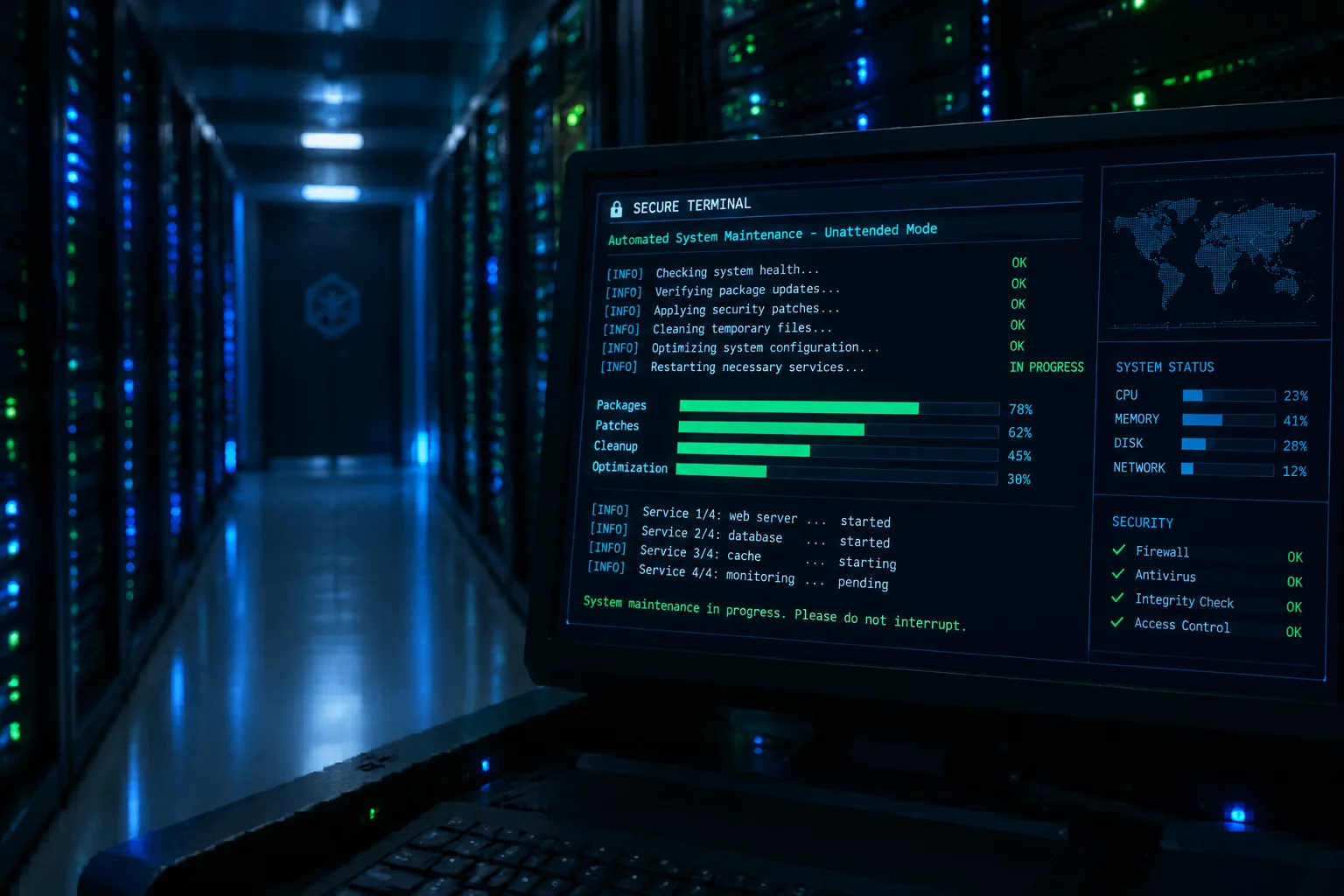
Unattended maintenance represents a deliberate architectural choice where system alterations occur without direct human interaction at the endpoint. This operational model applies primarily to headless servers, point-of-sale terminals, branch office gateways, and off-shift employee workstations undergoing bulk configuration scripts or kernel patch deployment. Unlike attended desktop assistance, unattended tasks rely entirely on pre-authenticated elevation and deterministic execution pipelines.
The primary engineering objective in unattended mode is eliminating ambient persistence. When an automated agent or remote engineer accesses a machine during scheduled downtime, the connection must remain strictly isolated to the approved change window. Leaving background services perpetually exposed to unrestricted administrative channels creates critical vulnerabilities. Establishing explicit start triggers, task-bound authorization tokens, and mandatory execution timeouts guarantees operational integrity across enterprise fleets.
Zero Persistent Backdoor Rule
Unattended maintenance windows must never rely on permanent standing root privileges. Ephemeral credentials, cryptographic session keys, and reverse tunneling daemons must automatically invalidate upon window expiration or task completion.
Mandatory Pre-Authorization Guardrails
Executing commands on unmonitored hardware demands rigorous verification steps before granting access sockets. Administrators must bind maintenance windows to approved change tickets, ensuring that script payloads and system privileges match declared operational parameters precisely.
- Time-bound cryptographic certificates delivered via centralized vaults rather than static stored service passwords.
- Complete command and output stream recording routed directly to append-only external SIEM storage repositories.
- Automated state verification and snapshot rollback mechanisms triggered whenever critical daemon health checks fail.
“An unattended maintenance channel is an uncontrolled vulnerability unless bound to deterministic time limits and audited runbooks.”
Safe Teardown and Verified Endpoint Handback
Conduits established for unattended tasks must cleanly sever connections immediately after the operational payload concludes. The agent software cleans temporary scratch directories, removes staged binary installers, and verifies that local firewalls return to restricted default-deny profiles. Logging agents calculate cryptographic hashes for modified configuration files and broadcast status receipts to the fleet management dashboard before the device returns to normal user availability.
Core Execution Rules for IT Engineering Teams
Deploying reliable unattended maintenance requires shifting from manual ad-hoc intervention to structured policy management. When engineering teams schedule overnight patching cycles, kiosk operating system upgrades, or database schema rebuilds, every session must respect explicit temporal limits, enforce mandatory telemetry capture, and isolate elevated tokens within ephemeral execution sandboxes.