Contrasting Interactive Assistance with Infrastructure Maintenance
IT organizations frequently conflate remote desktop sessions with remote systems administration. While both involve technical interaction across a network perimeter, attended support relies on direct end-user consent and shared desktop context, whereas device maintenance operates under explicit host ownership windows.
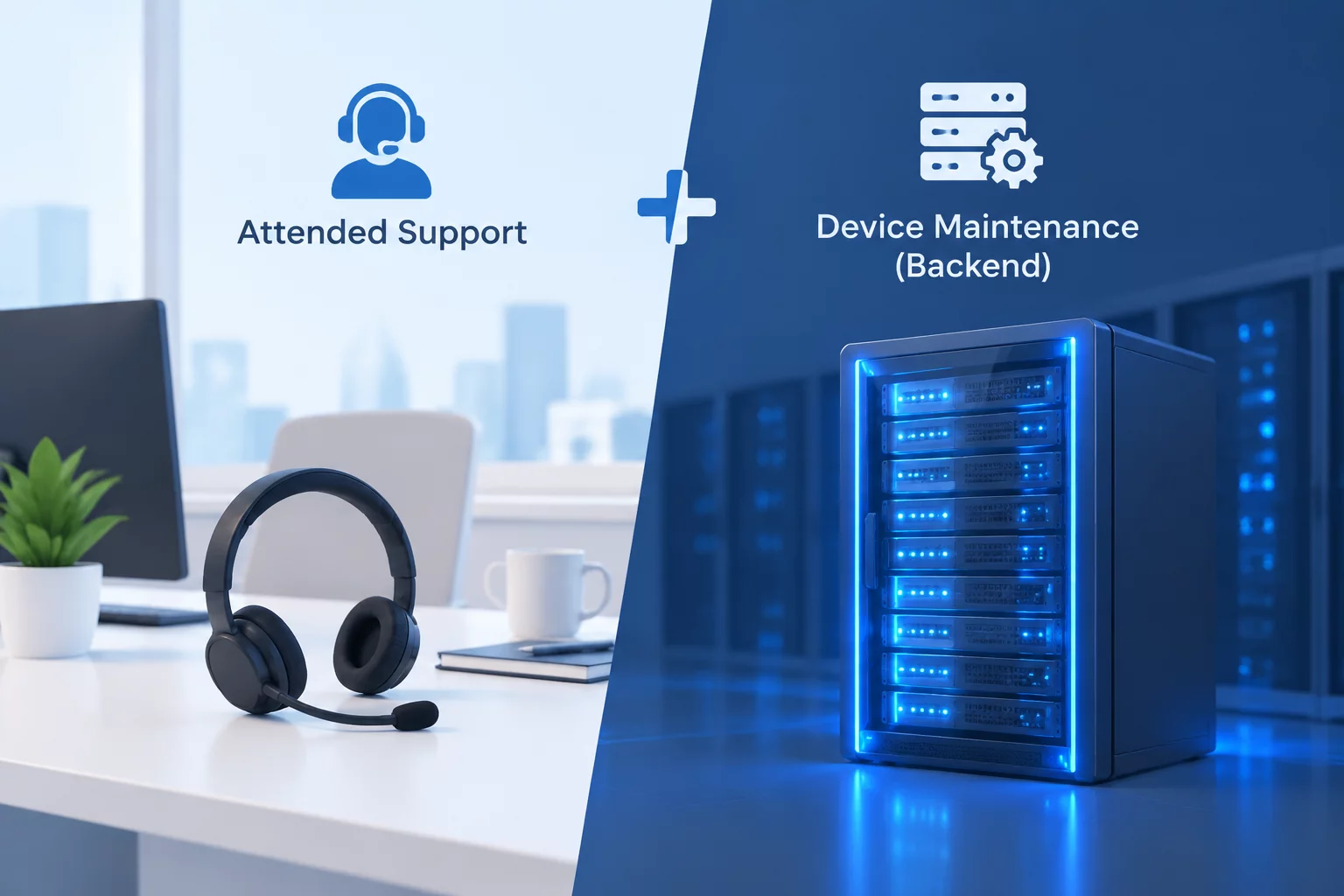
Table of Contents
Deconstructing the Technical Separation
Attended support mandates the active presence of the device operator throughout the entire engagement lifecycle. In this operational model, the user initiates or explicitly validates the incoming connection request, retaining visual agency over all actions performed on screen.
Conversely, device maintenance treats the endpoint as an autonomous compute resource. Engineering personnel schedule maintenance tasks during designated low-impact windows, where user interaction is neither expected nor desired.
- User-driven access initiation prevents unauthorized unmonitored connections.
- Visual parity ensures the user sees exactly what the engineer touches in real time.
- Instant revocation controls grant the local user immediate session termination power.
Granting remote control during an interactive session should never persist background access agents or elevated service credentials beyond the call duration. The security footprint must collapse the exact second the session disconnects.
Device maintenance windows require elevated system permissions that run unattended background tasks, applying driver updates, OS patches, or configuration profiles.
Key Takeaway: Never convert an attended troubleshooting session into an open-ended unattended maintenance pipe simply because the engineer needs more time after the user steps away.
When these boundaries blur, IT environments accumulate unmonitored persistent access hooks, violating least-privilege governance.
The termination phase in attended support represents an unambiguous handback of the physical device to the worker. Clear visual indicators inform the user that the remote stream has collapsed and no background channels remain open.
Device maintenance handbacks rely instead on automated health verification passes, event log validation, and system state snapshots before returning the device to active operational inventory.
Audit trails for attended sessions emphasize screen capture snippets, user consent timestamps, and chat transcripts documenting the real-time problem resolution.
Maintenance logging tracks structured configuration changes, software package hashes, registry modifications, and rollback checkpoints to satisfy compliance frameworks.
Treating a live user session as an unattended maintenance pipe breaks the trust contract between engineering teams and end users.— Brian Clark, Access Governance Lead
Establish Strict Access Boundaries in Your Fleet
Explore structured workflows to separate live helpdesk assistance from automated system maintenance windows.

Brian Clark
Related Fieldbook Articles